The Perfectly Matching Table Is a Myth
A welcoming mixed table setting needs no matching set: use repetition, generous spacing and one shared detail to make gathered pieces feel considered.
How do you make a mixed table setting feel welcoming rather than accidental? Start with the plates and glasses you already own: a table can feel considered without a matching set, if a few choices give the collection rhythm. Repetition, spacing and one shared detail do more than identical rims ever could.
What makes a mixed table setting feel intentional?
A table is read as a whole before anyone inspects the individual pieces. Guests notice where the colours gather, whether each place has room, and if some small element connects one setting to another. That gives you several ways to create coherence without making everything alike.
Choose one feature to repeat. It might be the shape of the plates, a colour that appears in several places, or the clear glass of the tumblers. The repeated feature acts like a quiet refrain; the different patterns and textures can then bring personality without competing for attention.
Spacing matters just as much. A blue plate beside a floral plate may look lively when both have breathing room, but crowded cutlery, bowls and glasses can make the same pairing feel fussy. Clear a little space around each place setting before deciding that two pieces clash.
How can you plan the table over a week?
A short, low-pressure plan lets you make decisions before guests arrive, while leaving room to use what is available. The point is not to shop for a complete set. It is to notice what you have, choose a linking detail and make the table comfortable to use.
Earlier in the week, what should you gather?
Pull out the plates, bowls, glasses and serving pieces you might use, then group like items together on a cleared surface. Check that there is enough for the people coming, including a practical option for serving food, and set aside anything chipped, unstable or awkward to handle.
Look for a repeated feature rather than a perfect match. Perhaps the plates differ in pattern but share a warm cream ground, or the glasses are varied but all have a simple shape. If nothing repeats naturally, choose one small detail to introduce later, such as the same napkin colour at each place.
A day ahead, how do you choose the combination?
Arrange the pieces in a rough place-setting order on a table, counter or clean floor. Put the largest plates down first, then add bowls, glasses and cutlery. This makes imbalances easy to spot: one dramatic plate can be balanced by a plain napkin, while several busy patterns may need calmer surroundings.
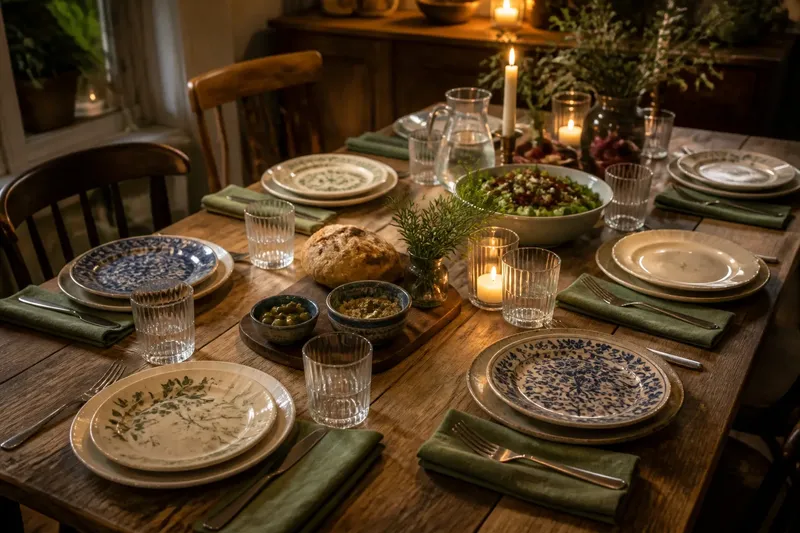
Imagine you have four dinner plates in two patterns, a handful of clear tumblers and napkins in one muted green. You could alternate the plate patterns, use the same glass at each place and fold a green napkin beside every plate. The expected result is a table with visible variety and a repeated colour that helps the settings read as a group.
Just before guests arrive, what deserves a final look?
Set the table with the food and conversation in mind. Leave room for serving bowls, water and elbows; move a decorative object if it blocks someone’s view. Check that each guest can reach the essentials without stretching across another person’s plate.
Then take a few steps back. If one end looks heavier, move a patterned piece or redistribute a serving dish. You are not trying to make both sides identical. You are looking for an arrangement in which no single corner feels overloaded.
Which pieces should you repeat, and which can vary?
It helps to distinguish the practical from the expressive. Pieces that guests use in the same way benefit from consistency where you have it: a similar drinking glass can make the table feel settled, and a common plate size keeps portions straightforward. But this is a convenience, not a rule. Different glasses or plates can work if each place remains comfortable and functional.
Let one category carry most of the variation. If the plates have strong patterns, keep napkins and glasses quieter. If the plates are plain, a handful of coloured tumblers or patterned bowls can provide the interest. When every item makes its own visual announcement, the table can feel busy rather than generous.
Serving pieces are useful places to introduce contrast. A large wooden board, a ceramic bowl in a different glaze or a plain platter can sit naturally among varied dinnerware because it has a clear job. Put it where people can reach it, and let its material or colour connect with something else on the table if possible.
There is no need to make an odd number of pieces look like a set, either. A few unmatched bowls can sit at one end for salad or fruit rather than being forced into every place setting. The arrangement feels deliberate when the difference has a purpose and guests can tell how to use the pieces.
What shared detail can bring everything together?
A shared detail should be small enough to support the collection, not dominate it. Napkins are an easy choice because they repeat naturally at each place. They can be paper or cloth, folded simply or laid loose; the point is the common colour, texture or finish.
Other options include a sprig of herbs beside each setting, the same simple name card, or a consistent candle holder at the centre. Choose something that suits the meal and leaves room for plates and hands. A repeated detail can be especially helpful when the dishes differ in both colour and shape.
Keep the detail in proportion. If the table already has bright plates, patterned glasses and a colourful serving bowl, plain napkins may be the useful link. If the dinnerware is quiet, a stronger shared colour can add warmth without requiring every piece to match.
How do you handle common table-setting questions?
Can different plate patterns sit together?
Yes, especially when the plates share a colour, shape or level of visual weight. Put the patterns next to each other and check whether one overwhelms the rest; a plain napkin or simple glass can give the eye a quieter place to land.
Do all the glasses need to match?
No. A mix of clear tumblers can look relaxed, and coloured glasses can add a useful repeated accent. Keep drinking comfortable and give each guest a glass that is easy to recognise and reach.
What if I do not own matching napkins?
Use a shared detail elsewhere, such as similar glasses, repeated place cards or a small herb sprig at each setting. Napkins can remain varied if they are clean and practical; they do not need to perform every unifying role.
Should every guest receive the same setting?
Not necessarily. A smaller plate may suit one course, and a bowl may be more useful for another. Keep the basic needs of each guest in mind, then use a repeated detail to make differences feel like thoughtful choices.
How can you make the table welcoming, not merely attractive?
A pleasing arrangement is only part of the invitation. Make sure guests can sit down without shifting a maze of objects, and keep serving dishes within easy reach. If you are serving food family-style, leave open space for bowls and platters before adding candles or decoration.
Think about how people will use the table over the meal. A tall arrangement can interrupt conversation, while a low bowl of fruit can add colour and still let people see one another. Keep anything fragile away from the busiest serving area, and avoid placing a valued piece where it could be knocked aside during passing.
When you plan a mixed table setting, begin with what is useful, repeat one feature, and give every piece enough space to be seen. A familiar collection can carry its own small differences: the bowl from a relative, the glasses gathered over time, the plates chosen one at a time. One shared detail helps those pieces sit together, while an easy place to sit and reach is what makes the table feel ready for company.