A Late-Summer Supper Built Around the First Ripe Tomatoes
Plan a late-summer supper around ripe tomatoes, with a simple centrepiece, bright contrasts and a relaxed serving arrangement that keeps conversation flowing.
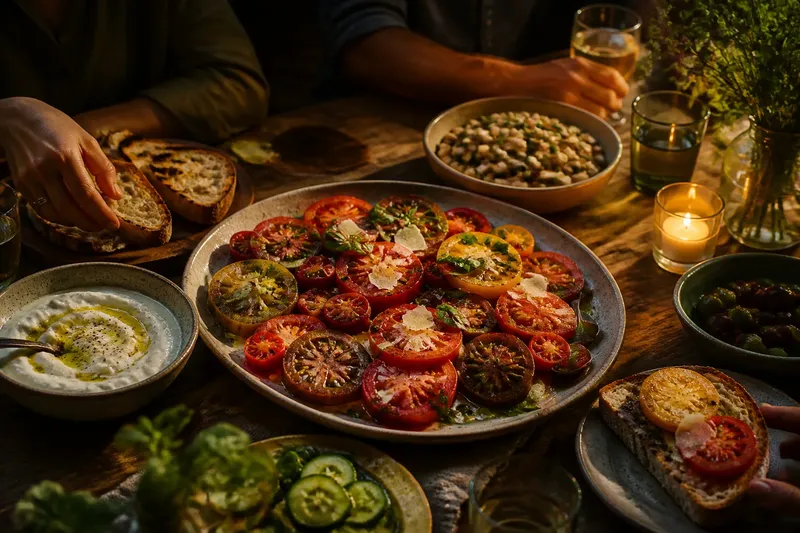
For a late-summer supper built around ripe tomatoes, start with the fruit that smells warm and leafy at the kitchen counter, then decide what will let it shine without turning dinner into a production. A platter of sliced tomatoes can be the centrepiece; bread, a contrasting accompaniment and an easy way to serve are enough to make the meal feel generous.
The point is not to dress every plate alike. Put the tomatoes where everyone can reach them, leave room for people to build a bite that suits them, and let the season set the pace. These choices give the supper shape while keeping the cook at the table.
1. Which tomatoes should lead the supper?
Choose tomatoes for fragrance, ripeness and the way you want to serve them, rather than insisting on a single variety. A mix of large, soft-fleshed tomatoes and smaller cherry or plum tomatoes gives the platter different textures and shapes. If the market has only one sort that looks ready, that is a good enough starting point.
Look for fruit that feels yielding but not mushy and smells distinctly tomato-like near the stem. A ripe tomato need not be flawless: a split or bruised patch can be trimmed away, while fruit that is leaking or has an unpleasant smell is better left out. Keep the best-looking tomatoes for the raw platter and save less tidy, sound pieces for a cooked dish.
Let tomatoes come to room temperature before serving so their aroma is easier to notice. Cut them close to mealtime, since their juices will gather on the board or platter. Use a serrated knife for soft skins, and arrange slices with a little overlap rather than piling them into a mound.
2. What makes a simple centrepiece?
A broad platter of sliced tomatoes, salt, good olive oil and torn herbs can carry the meal. Use a shallow dish so the tomato juices collect at the bottom instead of spilling across the table. A pinch of flaky salt, if you have it, gives a crisp little contrast; ordinary fine salt works too, added sparingly just before serving.
Basil is a familiar partner, but parsley, mint or a few tender leaves of oregano can bring a different note. Tear larger leaves by hand and scatter them loosely. A little red-wine vinegar or lemon juice can sharpen especially sweet tomatoes, but taste a slice first: some fruit already has a lively tang.
Keep additions deliberate. A few curls of shaved cheese, such as pecorino or Parmesan, can make the platter more savoury, while soft mozzarella or fresh goat’s cheese makes it richer and milder. Put cheese on the side if guests may prefer the tomatoes on their own. The centrepiece should still read as tomatoes at first glance, not as a salad assembled around a cheese.
3. Which accompaniment gives the plate contrast?
Choose one accompaniment that changes the texture or temperature of a bite. Crisp bread is the easiest partner: it catches the tomato juices and gives the plate a satisfying edge. Set out toasted sourdough, grilled flatbread or slices from a good country loaf, with a small bowl of olive oil for dipping.
For a cooler, creamy contrast, serve thick yoghurt or labneh with black pepper and a thread of olive oil. For something more substantial, offer butter beans dressed with lemon, parsley and olive oil, or a bowl of warm courgettes cooked until tender. These choices make the meal feel complete without asking the tomatoes to compete with several elaborate dishes.
Think about the contrast as guests take a bite: juicy against crisp, cool against warm, or gentle against sharp. You do not need all of those at once. If the tomatoes are exceptionally sweet, a salty or tangy side may be enough; if they are more tart, creamy yoghurt or a soft cheese can round the flavour.
4. How can you make the menu feel complete without crowding it?
Let the main platter and accompaniment do most of the work, then add no more than one extra dish if the table needs it. A bowl of olives, a small plate of sliced cucumbers or a green salad with a restrained dressing can fill a gap without pulling attention away from the tomatoes. Choose something that can be prepared ahead and served at room temperature.
If you want a more filling meal, add a dish that can sit happily beside the centrepiece: boiled new potatoes tossed with herbs, a frittata cut into wedges, or grilled fish served on a separate plate. Each brings its own character, so keep seasoning and garnishes simple. A heavy sauce or several strongly flavoured sides can blur the fresh, direct quality that makes ripe tomatoes appealing.
Say you have a small bowl of mixed tomatoes, half a loaf of sourdough and a tub of plain yoghurt. You could slice the larger fruit for the platter, halve the small ones, season the yoghurt with pepper and olive oil, then toast the bread shortly before people arrive. The expected result is a table with soft, juicy slices, cool creaminess and crisp bread, without a complicated cooking schedule.
5. How should you arrange the food for conversation?
Place the tomato platter within easy reach of several seats, not at the far end of the table behind bottles and serving bowls. Keep bread in a basket or on a board beside it, and set the accompaniment in a separate bowl with its own spoon. Guests can serve themselves without passing one overloaded dish around the table.
Use serving pieces that suit the food: a wide spoon for tomatoes and their juices, small tongs for bread, and a spoon for yoghurt or beans. Put a few small plates and napkins within reach. If the table is narrow, serve the tomatoes and bread first, then bring the accompaniment when there is space rather than trying to arrange every dish at once.
Leave the platter accessible after everyone has served themselves. The last slices are often the ones people want for mopping up the dressing, and a little room around the dishes makes it easier to linger. This is an informal supper, so an empty patch of table is useful, not a decorating problem.
6. What can you prepare before guests arrive?
Do the quiet jobs early: wash and dry herbs, set out plates, toast nuts if you are using them, and mix any dressing. Keep cut herbs covered in the fridge, and leave whole tomatoes at room temperature. Slice the tomatoes near serving time so their texture stays pleasant and the platter does not sit in a pool of juice.
Prepare the accompaniment according to its needs. Beans can be dressed ahead and allowed to reach room temperature; yoghurt can be spooned into a bowl and finished with oil just before it goes to the table. Toast bread close to dinner, or warm it briefly in the oven if it has cooled. These small timings preserve a fresh feel without demanding constant attention.
Keep the final seasoning flexible. Salt can draw liquid from tomatoes, so add it shortly before serving and taste a piece before adding more. Leave extra salt, oil and vinegar on the table for guests who want to adjust their own portions.
7. What should you do with the last tomato juices?
Do not let the flavour left on the platter go unnoticed. Pass the dish with a spoon, or set it beside the bread so guests can dip a crust into the mixture of tomato juice, oil and seasoning. A small bowl of juices can also be spooned over beans or greens at the table.
If some tomatoes remain after supper, refrigerate them in a covered container and use them soon in a cooked sauce, soup or toast topping. Their texture may soften, but cooking makes that less important. Keep them separate from bread and herbs so the leftovers do not become soggy together.
A late-summer supper around ripe tomatoes needs little more than a thoughtful centrepiece, one contrasting accompaniment and space for everyone to reach in. Choose fruit that smells ready, keep the additions restrained, and let the last useful detail be a piece of bread at hand for the juices.